 by
by 
How Abrasion Testing Helps Manufacturers Select Better Footwear Sewing Threads
- September 30, 2026
- blog
In footwear manufacturing, sewing machine thread is often a small component, but its performance can have a major impact… Read More
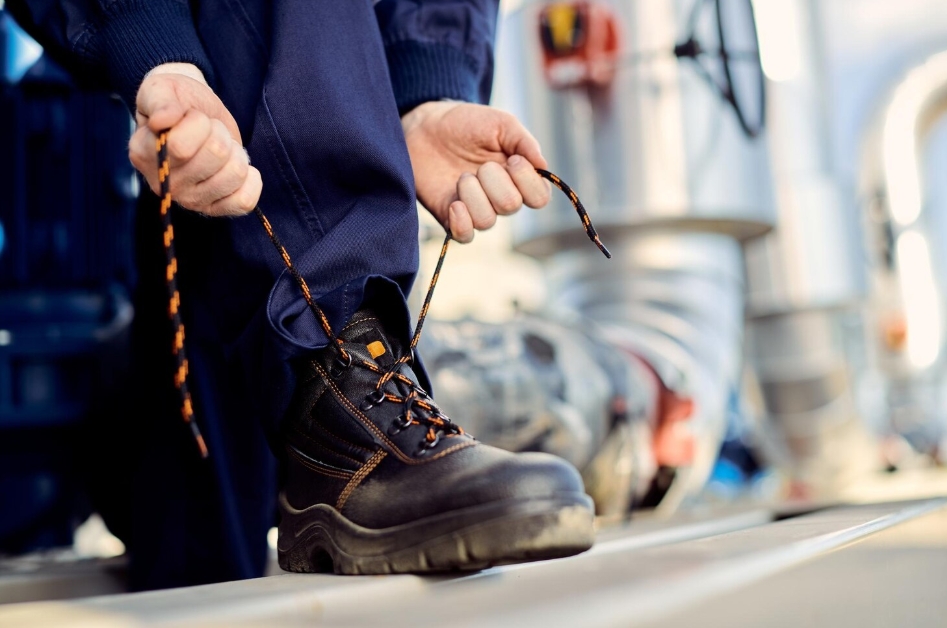
When a normal shoe can’t keep up, work shoes and heavy-duty footwear come in handy. Footwear is likely to be subjected to temperature extremes, dirt, chemicals, abrasion, and moisture and experienced constant pressure at construction sites, factories, and warehouses, as well as at farms, mines, workshops, and outdoor workplaces. Every element in the boot is serving a critical purpose in these types of conditions.
The sole provides traction, the upper provides protection, and the cushioning provides comfort. For sewing to hold these very components together is the need of the sewing thread (polyester sewing thread). While thread is one of the smallest components in the footwear manufacturing process, it can have a wide impact on the durability and reliability of the final product.
Selecting a thread for rugged heavy-duty sneakers can thus not be simply a case of selecting a sturdy product. Manufacturers should be aware of the way the thread interacts with the sewing machines during the sewing operation and how it performs under repeated flexing, friction, moisture, and other stressful conditions once the boot is sewn up.
Work boots endure a lot more stress than virtually any other shoes. Their use entails 8-12 hours of work without the ability to rest, moving around on walking, climbing, kneeling, lifting, and working on surfaces that are not level.
If the right thread is not used, manufacturing defects (e.g., thread breakage) or operational problems (e.g., seam failures) can occur. In both cases, this could adversely impact the quality and final product reliability and lead to cost increases.
The best thread should be a combination of:
When picking out thread for work boots, strength is one of the first properties that manufacturers will take into account.
Heavy-duty shoes may have several layers, multiple reinforcements, woven material, and even outer or leather layers. Stitching may be stressed in these areas.
In environments where the shoe is pulled and repeatedly stressed, a high tenacity thread can be used to help prevent seam failure.
But thread strength should always be taken into account in conjunction with the material to be sewn. Its thread is extremely strong, but it’s not necessarily a stronger all-round seam.
The entire seam operation, such as the thread size, type, density, needle size, and material thickness, should be considered when it comes to seam technology.
Few properties are as important for work boots as abrasion resistance.
During manufacture and while the boot is in service, there can be constant rubbing with the stitching. Employees can kneel, walk across rough surfaces, or be exposed to equipment and material that can cause damage to exposed seams
Damage to the outside of the thread may result in gradual loss of strength.
Tease or even burn threads may help preserve the integrity of the seams and provide long durability in high-wear areas, including:
If the shoe is to be rugged, then not only should the initial tensile strength of the shoe be considered by the manufacturer, but also the number of abrasions that the shoe can withstand.
Work boots might appear to be stiffer, but they require some give when it comes time to move.
The upper is subjected to repeated changes during walking, climbing stairs, bending, squatting, and kneeling. This motion will cause stress to be placed around the stitches if the motion cannot be made in the thread.
The flexible and elongation-suitable thread can make the seam move in the same direction as the material, and it will not oppose the material’s movement.
The right balance is important. Too short a tail may add stress and breakage, and too long a tail may cause improper stitching and sealing along the seams.
Work boots may be required outdoors where they may come into contact with water. Footwear parts may be compromised by rain, dirt, mud, perspiration, washing, and moisture.
Some thread (nylon sewing thread) properties are affected by moisture, including mechanical and dimensional aspects. Therefore, the environment for the footwear use should be taken into account by manufacturers.
Moisture performance may be a critical feature to consider in outdoor work boots, agricultural work shoes, and industrial shoes.
The thread should not weaken or change shape from repeated exposure to the conditions to which it will be subjected.
Footwear can be other than exposed to liquids like oils, solvents, cleaning solutions, chemicals, or other substances in some work environments.
The exposure conditions for chemicals can be different in various factories, workshops, laboratories, agriculture, and industrial facilities.
For such applications, the manufacturers should be familiar with the type of materials the end footwear will be put into use with.
The ability of a thread to work well in routine sewing tests does not imply resistance to chemicals. Application-specific testing can give more information on long-term behavior.
The materials used in making shoes can sometimes be tough to sew. This has been linked to thicker leather, layers of material, and heavy constructions to add resistance in the sewing process.
The high speed of sewing also causes friction and heat to develop in the area of the needle and thread path.
However, if the thread isn’t suitable for the production conditions, manufacturers may encounter:
Thread finish and lubrication can affect the smoothness of the thread’s movement through the machine.
Consistency of a thread can minimize interruptions and improve stitch uniformity.
The important factor, as well as the thread material, is the size of the thread chosen for the work.
The position of the thread might be different for some structural stitches in the heavy-duty boot, or the fine hook might be able to do the stitches better in the lighter-duty boot.
The following, however, should be considered:
There is no need to use a thread that is unnecessarily large, which can lead to bulk and make sewing harder. One that is too fine can reduce durability.
The work boot is designed with the function in mind, but it hasn’t taken the back seat when it comes to appearance.
Contrasting thread colors are also a way that many brands create an individual and unique look. Something that is aesthetically flawless, neat, and tidy is more of a kick in the rear for a boot.
Therefore, thread should possess good color consistency and fade resistance to sunlight and moisture, and if necessary, cleaning and wear.
Results are also an important aspect since uneven feeding can impact a stitch’s appearance; it’s where it should be consistent and winded throughout the winding.
Testing Threads Under Real Conditions
Laboratory information serves as valuable data, but it is best to perform heavy-duty production trials as well.
One helpful way to test is to:
1. Test the thread with the actual upper material.
2. Use the intended needle and sewing machine.
3. Operate the machine at the actual production speeds.
4. Inspect thread breaks and stitch uniformity.
5. Inspect seams for strength and appearance.
6. Test friction resistance as appropriate.
7. Assess the moisture and chemical contacts for the purpose of the use.
9. Perform flexing or durability tests on completed footwear.
This method will aid in the detection of infections that may not be detected in routine laboratory examinations.
Manufacturers can pose, before approving a thread for work boots or footwear that heavily char their soles, the question:
Is the thread enough to hold the weave together?
Does it have anti-scratch capabilities?
Will it work with the top materials?
Does it maintain performance under moisture exposure?
Will exposure to chemicals be a factor in use?
Does the seam size need the correct thickness of thread?
Is it easy to pass through the sewing machine?
Will it hold up to the necessary sewing speed?
Does it form good stitches?
Does the color remain when subjected to normal exposure?
Has it been tested in the actual type of footwear materials?
Is the completed seam as durable as desired?
A checklist will help to ensure that the selection of the thread is not purely based on the tensile strength or cost of the thread.
A heavy-duty boot should be able to withstand rigor, and the stitching should be able to hold up as well. The strength, durability, flexibility, appearance, and production efficiency of the seams can be greatly improved with the use of an appropriate sewing thread.
However, the correct selection is based on a lot more than just tensile strength. Considerations for the manufacturer include abrasion, moisture, chemicals, heat, thread size, flexibility, machine suitability, and the end-use requirements of the footwear.
As work footwear continues to evolve with lighter materials, advanced safety features, and more specialized applications, thread selection will become increasingly important. Rather than just being thread, it is important to view sewing thread as an essential element in the design of footwear engineering, ensuring that the products can operate stably and comfortably and work for long in complex working environments.
In footwear manufacturing, sewing machine thread is often a small component, but its performance can have a major impact… Read More